
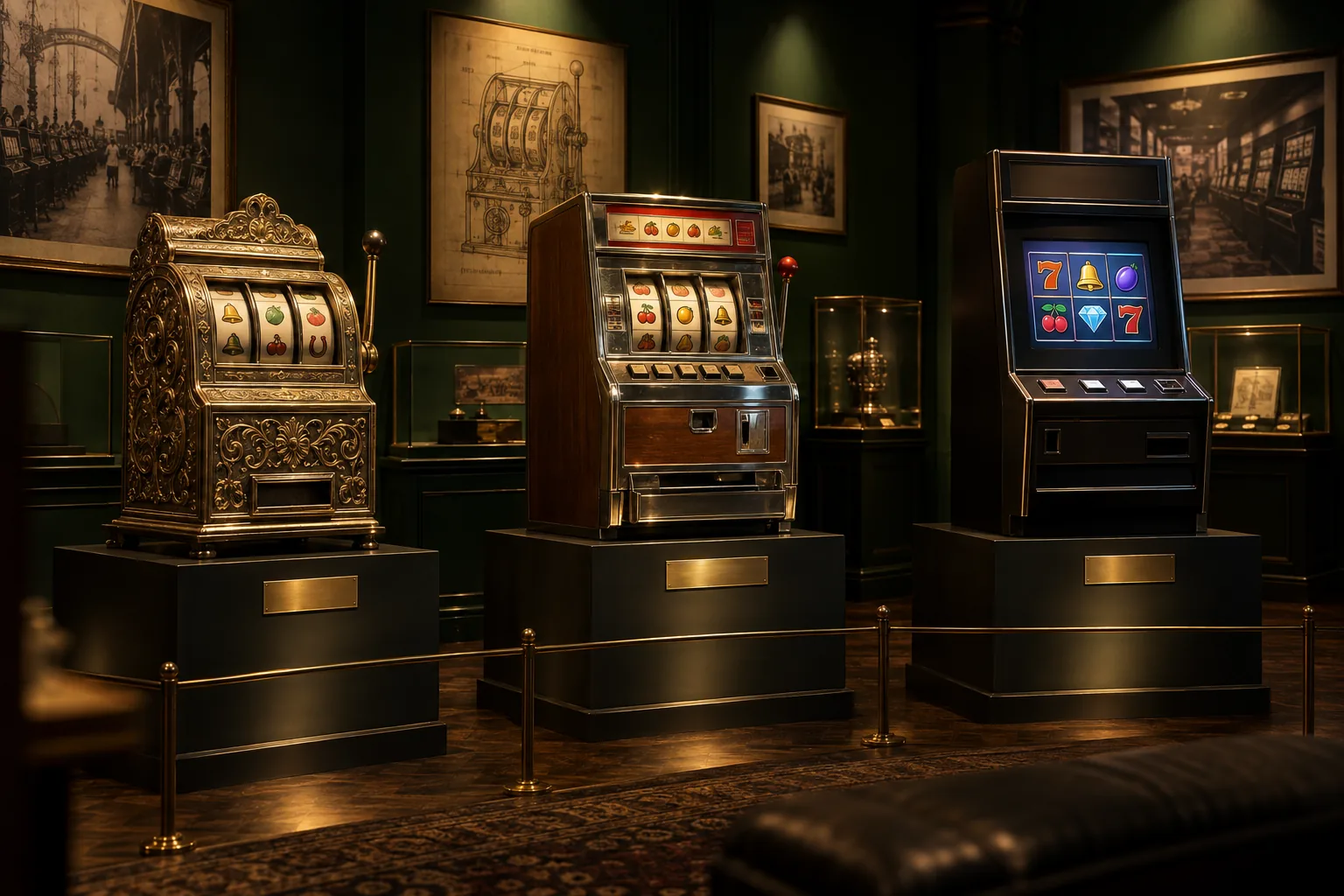
The slot machine’s history is often compressed into a story of brighter screens. Its deeper change was in where the game’s outcome was determined: first by moving mechanisms, then by electrical control, and eventually by software and tested random number systems.
Mechanical beginnings
Early reel machines were physical devices. A lever set mechanisms in motion; reels, stops and a payout apparatus formed the visible game. The cabinet had to be sturdy and easy to maintain. Its symbols and sounds became a visual language that later generations retained even after their mechanics disappeared.
The classic three-reel format made outcomes legible at a glance. Yet the machine was a technical object as much as entertainment: wear, tampering and accounting all mattered to operators and, later, regulators.
The electromechanical bridge
Electrical components gradually took over work once performed entirely by springs and gears. Motors, lights and control circuits enabled new cabinet designs and game features. This was a bridge rather than a clean break; machines could still display physical reels while electrical systems directed parts of their operation.
The change expanded what designers could animate and what operators could monitor. It also increased the need for documented maintenance and equipment testing.
Digital logic and video
Research published through UNLV’s Center for Gaming Research places the arrival of digital slot machines on casino floors in the mid-1970s. Microprocessors moved game logic into electronic systems and helped make video displays practical. The screen could present themes and bonus sequences without depending on a fixed set of physical reel windows.
Digital does not mean unregulated or predictable. In a regulated device, outcome generation, accounting, software integrity and the display of rules are subject to technical review. Nevada’s Technical Standard 1 is a useful modern example of how detailed those requirements have become.
Networks, records and oversight
As devices became connected, accounting systems could collect meter information and support audit trails. Voucher and cashless systems changed the interface between the machine and the venue, while placing new emphasis on secure communication and reconciliation. These changes are part of a wider history of casino operations, not simply of cabinet design.
The continuous theme is trust: a visitor must be able to understand the displayed rules, and an operator and regulator must be able to verify that the machine behaves as approved. A glamorous exterior always rests on a less visible technical and accounting system.
Sources & further reading
Selected institutional and primary sources used to verify key dates and context. External pages may change after publication.