
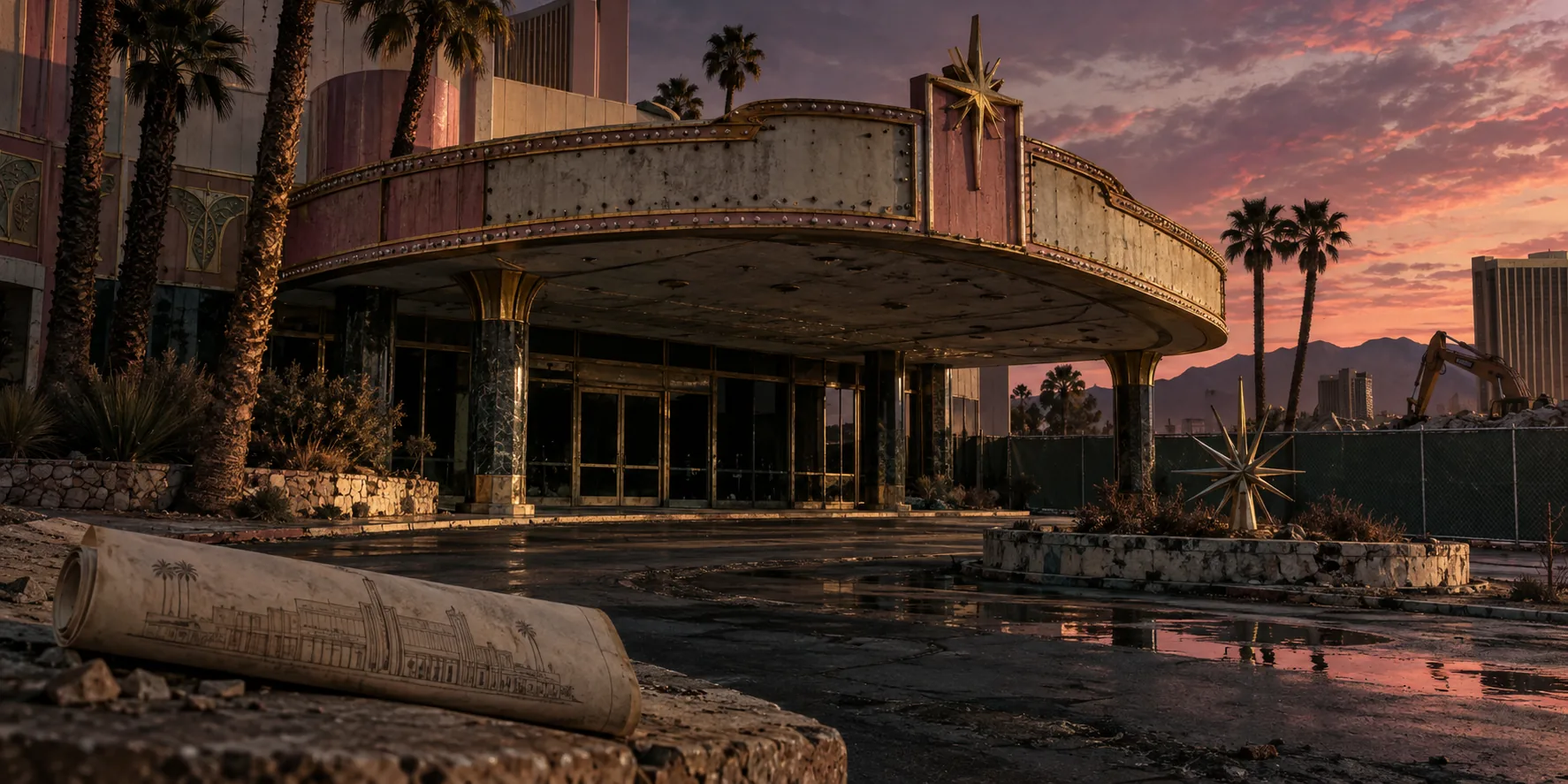
Some of the most influential casino buildings can no longer be visited. Their signs, showrooms and towers survive in films, oral histories, drawings and carefully preserved collections. The loss of a building does not erase its place in the story.
The Sands, 1952–1996
The Sands was central to the mid-century image of Las Vegas: a hotel, casino and entertainment venue bound to the Rat Pack era. UNLV Special Collections traces its opening to 1952 and its demolition to 1996, when the site was cleared for the Venetian. The contrast between those two properties captures a change in scale, theme and visitor expectations.
Its history is also a lesson in sources. Promotional photographs show the glamour; floor plans, business records and contemporary reporting help explain how the property operated.
The Dunes, 1955–1993
The Dunes opened in the mid-1950s and pursued spectacle through signage, shows, additions and themed spaces. UNLV’s Dunes records describe its entertainment and business history as well as the financial pressures that marked later decades. Much of the property and its sign were destroyed in an October 1993 implosion. Bellagio opened on the site in 1998.
A site can thus carry successive meanings: one generation remembers the Dunes, another sees only Bellagio. Archival work restores the earlier layer to the map.
The Stardust, 1958–2006
The Stardust operated from 1958 to 2006 and was demolished in 2007. UNLV preserves extensive records of its shows, resort design, promotions and corporate history. Its changing signs and interiors document how a property kept adapting to new tastes.
The Stardust story also belongs to the history of oversight. Archival records discuss the investigations into illegal skimming and the subsequent regulatory response. A full account of any celebrated property must make room for its labour, governance and controversies as well as its neon.
How a lost casino is reconstructed
A postcard may date a façade; a building plan reveals circulation; an employee interview describes service; licensing files show what the state required. Each source answers a different question. None alone is the complete building. The physical disappearance of casino resorts makes university and public archives especially valuable.
Preserving these records matters beyond nostalgia. They document urban redevelopment, architecture, entertainment work and the changing way public authorities approached gaming businesses.
Sources & further reading
Selected institutional and primary sources used to verify key dates and context. External pages may change after publication.